PikiP
Aqueduc Festival: on the road to energy self-sufficiency
Using the 3 PikiP solar power generators reduced the carbon footprint of the between-acts stage by 10x, compared to thermal generators.
The Aqueduc Festival took place on 6 and 7 June 2025 at Chanopost (69). This festival puts respect for the environment at the heart of its priorities and wanted to introduce concrete measures to reduce its ecological impact. To that end, Pikip Solar Speakers was called on to equip the stage used for the between-acts entertainment.
The brief was to provide:
→ The power needed for lighting and backline
→ The stage sound system
→ Photovoltaic energy production
This over one day of setup and sound checks on 5 June, then 6 and 7 June from 5pm to 11pm. Solar power generation makes it possible to recharge the PikiP equipment to cover both days.
Equipment used
For the festival's needs, we put together a kit including:
→ 7 sound speakers ( 2x subwoofers - VTL118; 2x constant curvature - VCH30; 3x full range - VCX12)
→ 3 energy modules ( 2x energy stations - SE6000, with available power: 6000W - 9000 Wp and battery capacity: 4800 Wh; 1x self-powered amplifier - AEA, with available power: 1200W - 2400 Wp and battery capacity: 3500 Wh)
→ 2 solar platforms ( 1x FLYPV with photovoltaic energy production: 1700 Wp)
Summary of data collected
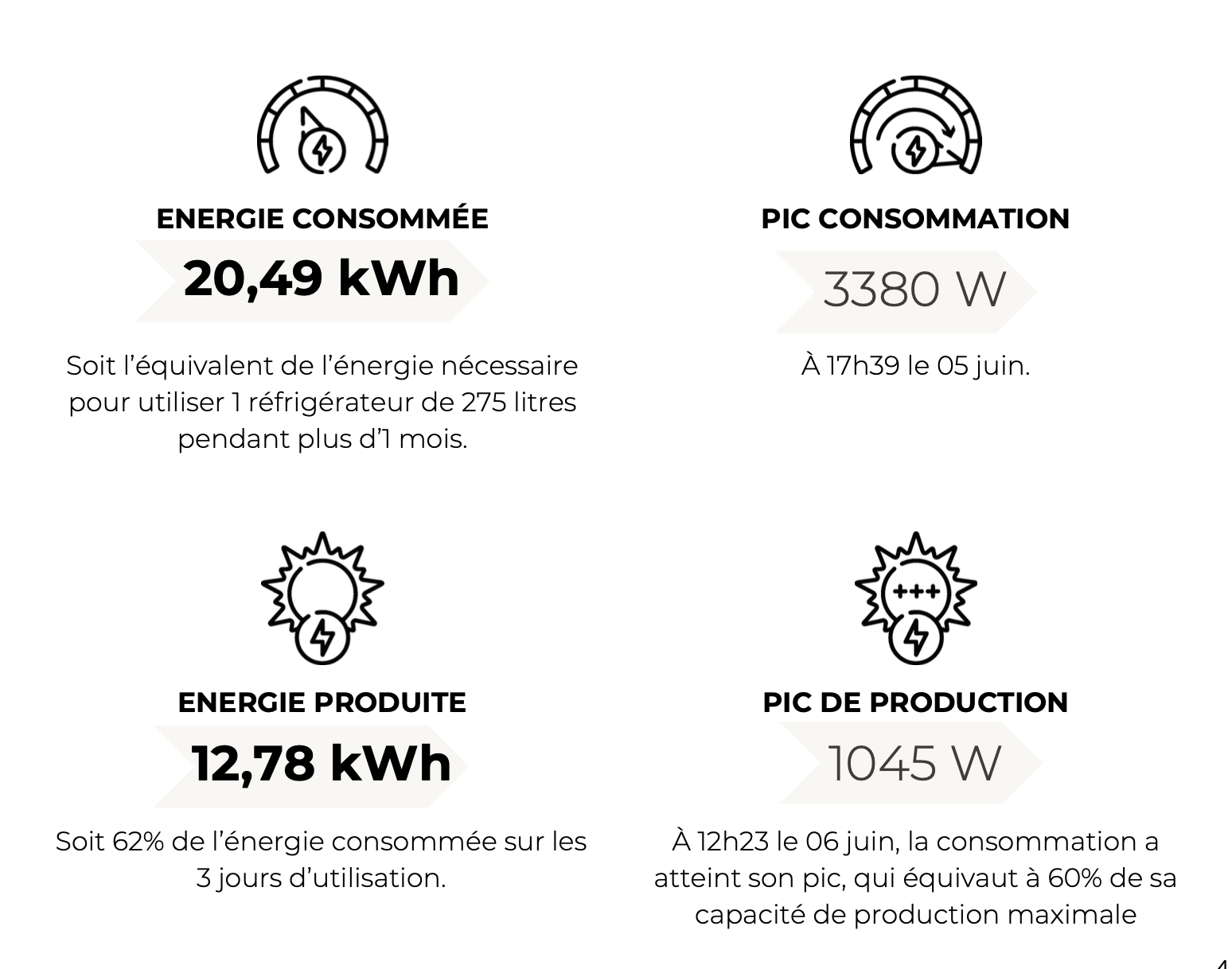
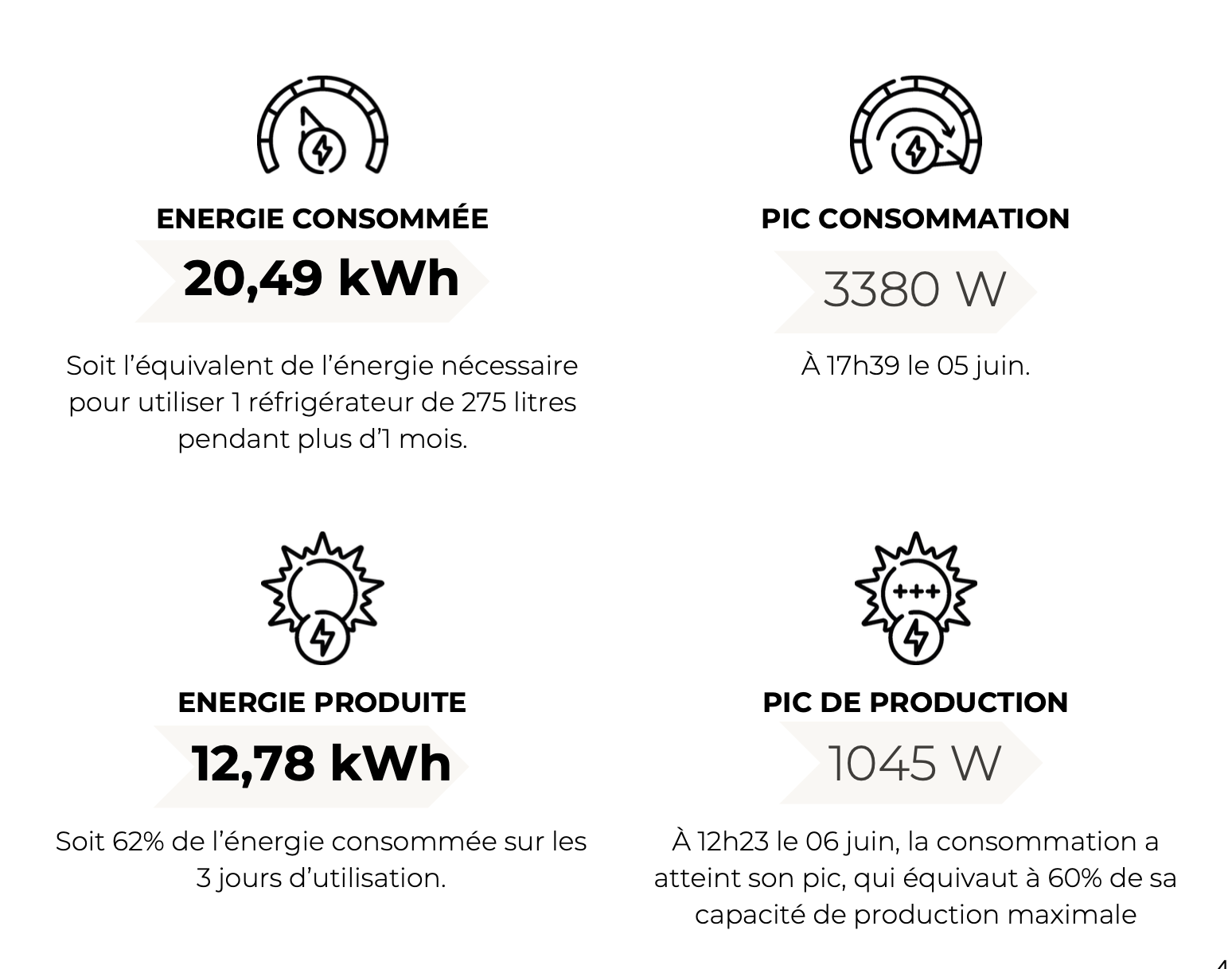
→ Energy consumed: 20.49 kWh
→ Energy produced: 12.78 kWh
→ Peak consumption: 3380 W
→ Peak production: 1045 W
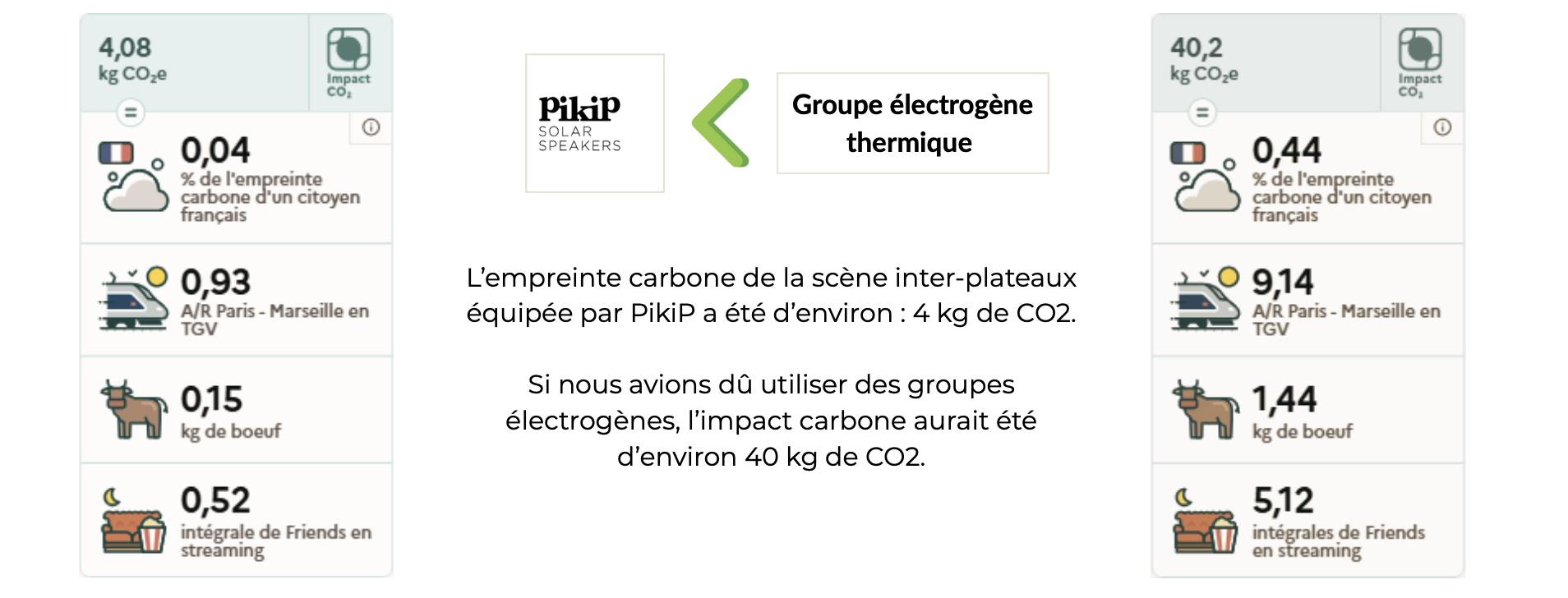
Using the 3 PikiP solar power generators made it possible to reduce the carbon footprint of the between-acts stage by 10x, compared to thermal generators.
The carbon footprint of the between-acts stage equipped by PikiP was about 4 kg CO2e. Had we needed to use thermal generators, the carbon impact would have been about 40 kg CO2e.
Close to self-sufficiency, ready for 2026
The festival's total energy consumption came to 20.5 kWh, of which 12.8 kWh were covered by a single FLYPV, despite unfavourable weather conditions.
Solar output was limited due to the rain, but this result already demonstrates the real potential of the system: with better weather or the addition of a second FLYPV, we could have covered the entire energy needs of the between-acts stage.
For the next edition, we could consider a reinforced setup, more resilient to weather variations, allowing us to reach or even exceed energy self-sufficiency, while keeping the staging light, aesthetic and sustainable.