PikiP
ACOUS'TIPS #04 - Understanding Decibels
Gain and amplification:
The first thing to know to understand what a decibel is, is that potentially anything can be quantified as a decibel (a weight, a force, a temperature...). In practice, this unit is mainly used in electronics, signal processing or acoustics.
In acoustics, we very often talk about dB SPL (Sound Pressure Level), often abbreviated dB, a unit that quantifies sound level. In electronics, dBu or dBV are used for electrical voltage, or dBm for power. In signal processing, dB FS...
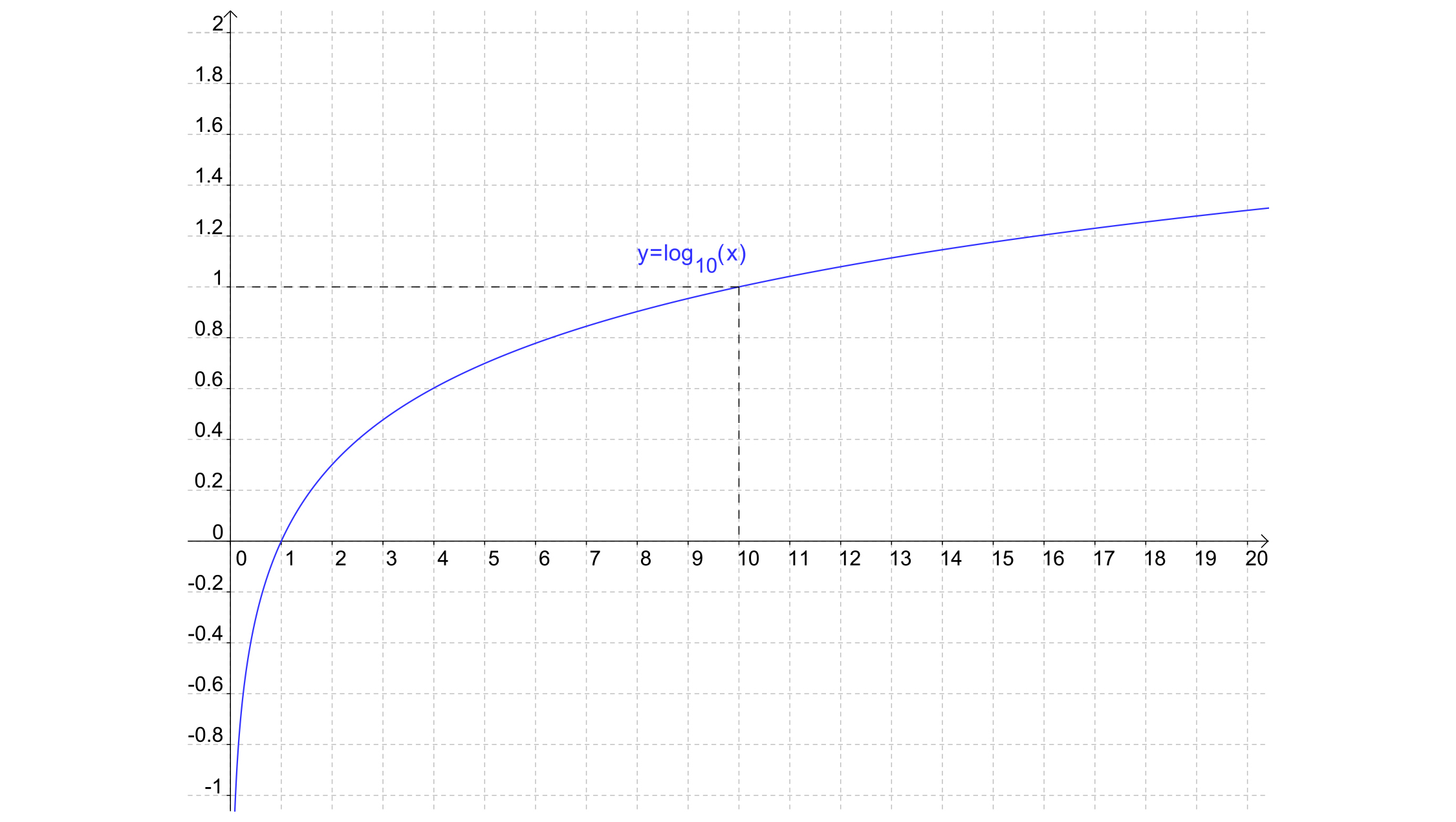
How can a single unit quantify so many different things? In fact, the decibel is not a classic unit, since it is a dimensionless quantity, meaning the ratio between the quantity we want to measure and a reference value of the same unit. The dB also has the particularity of being obtained using a logarithmic function.
Example: the sound pressure level (dB SPL) is obtained by dividing the measured pressure by a reference pressure, then multiplying the base-10 logarithm of the result by 20: dB SPL = 20 log10(Pmeasured/Pref)
How is the reference quantity established? Well, it depends on the case. For sound pressure, the lowest pressure that the human ear can perceive is chosen (2 microPascals). For dBu, the reference is 0.775 V, for historical reasons linked to telecommunications. For dBV, it is 1 V, and 1 mW for dBm.
Power dB and field dB
Two main types of decibels can be distinguished, those of power (electrical with dBm, acoustic with dB Lw...) and those of field or amplitude (dBu in Volts, dB SPL in pascals etc.). Decibels are formally, originally, a ratio between two powers, but field decibels are more often used (amplitude and power being physically linked). Field dB are in fact disguised power dB, since power is proportional to the square of amplitude.
dB that involve power equal 10log10(x), field dB equal 20log10(x). Doubling power corresponds to an increase of 3 dB, whereas doubling voltage corresponds to 6 dB.
Why use dB?
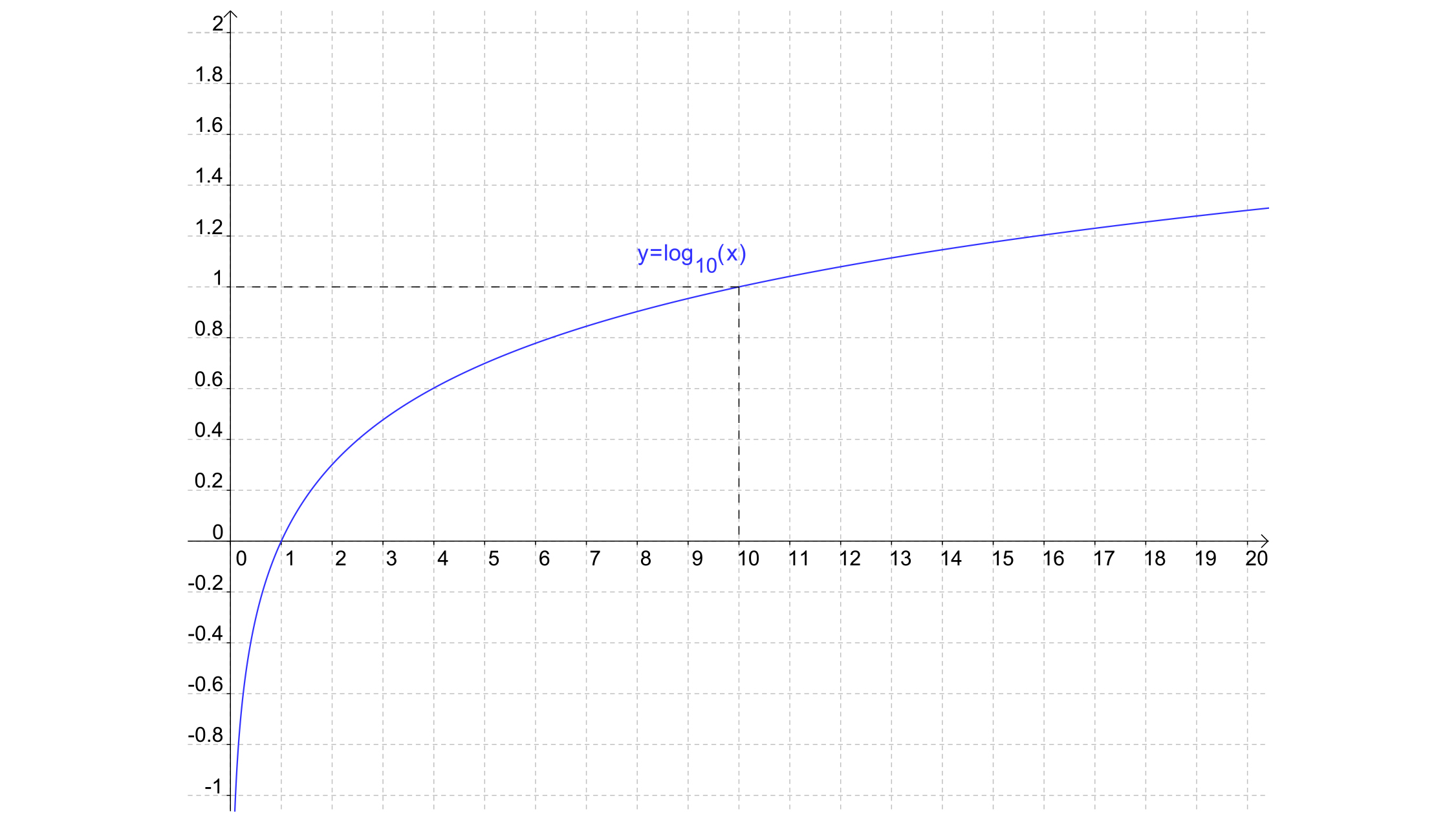
The advantage of the logarithmic scale is that it flattens values and makes them easier to read. Indeed, 0 dB SPL corresponds to a pressure of 0.00002 Pa, and 190 dB to 63000 Pa, an enormous ratio that is hard to picture. By switching to a log scale, everything becomes more readable (and calculations are simplified, often doable in your head: a multiplication becomes an addition, a division a subtraction).
Gain and amplification:
dB can also be used to describe gain (that is, the level variation) between two situations: in this case, the reference Uref becomes situation 1 and the numerator situation 2. We no longer talk about dBu or SPL, but simply dB.
For example: an amplifier has a gain of 6 dB (that is, the voltage at its output is 6 dB higher than the voltage at its input), the calculation is as follows: 6 dB = 20*log10(Voutput/Vinput). If we know the input we can find the output: Voutput = 10^(6/20)*Vinput. If Vinput = 1, Voutput = 2. We can deduce that a gain of 6 dB corresponds to doubling the voltage.
If we redo the calculation with power, we get 3 dB = 10*log10(2/1). Doubling power corresponds to a gain of 3 dB. A gain of 6 dB in power means multiplying by 4.
Since an audio system is linear as a first approximation, to increase the SPL level by 6 dB you need to multiply the input electrical power by 4.
Importance of efficiency and sensitivity
This brings us to the importance of a speaker's sensitivity and efficiency. Sensitivity represents the SPL level produced by a speaker for a given voltage at a distance of one meter. Efficiency is similar to sensitivity, except that it considers an input power rather than a voltage; a highly sensitive speaker is not necessarily a highly efficient one.
A speaker with a sensitivity of 90 dB SPL for 2.83 V (that is, 1 W on an 8 Ohm load) will need 90 V to produce 120 dB SPL. If we look at efficiency and therefore power, which is much more relevant than sensitivity, and the speaker actually has an impedance of 8 Ohms (theoretical case), 1000 Watts are needed.
If we redo the calculation for a speaker with higher efficiency and sensitivity, say 98 dB, we get 35 V and 160 Watts, saving 85% of energy.
120 dB SPL is an average value, but music contains many peaks (instrument attacks, percussion...). These can easily rise to 126 dB or 132 dB and more for a concert. To reach 126 dB, the power must again be multiplied by 4 (8 for 132 dB)! It is therefore important to keep in mind the physical quantities behind dB, as power levels quickly become very high on typical sound systems.
Conclusion
The existence of several types of decibels is often a source of confusion. It is enough to understand that dB is above all a way of representing physical quantities in a simplified and practical way. It is important to differentiate between the two main types of dB, those of power and those of field or amplitude, in order to get correct results when calculating.