PikiP
The AES publishes PikiP's R&D work
Following the launch of the Stage LT series, which includes the constant-curvature VCH30 speaker and the ... \\
Since its founding, Pikip Solar Speaker's goal has been to offer high-end sound systems that use minimal energy (for maximum autonomy), very often going against the trend towards ever more power that characterises today's sound systems. To achieve this, for the past 5 years R&D has been at the heart of the company's activity, both in acoustics and in energy management.
To share its results with the scientific community and push the audio world towards less energy waste, our engineers have published, in the journal of the Audio Engineering Society, the Journal of the AES, the reference peer-reviewed scientific publication for audio and electroacoustics, an article summarising part of their work.
The first part of the article carries out a critical review of the metrics commonly used to measure speakers (frequency response, sensitivity...) and other rarer ones (Constant Input Power, weighted efficiency...), discussing the advantages and limitations of each.
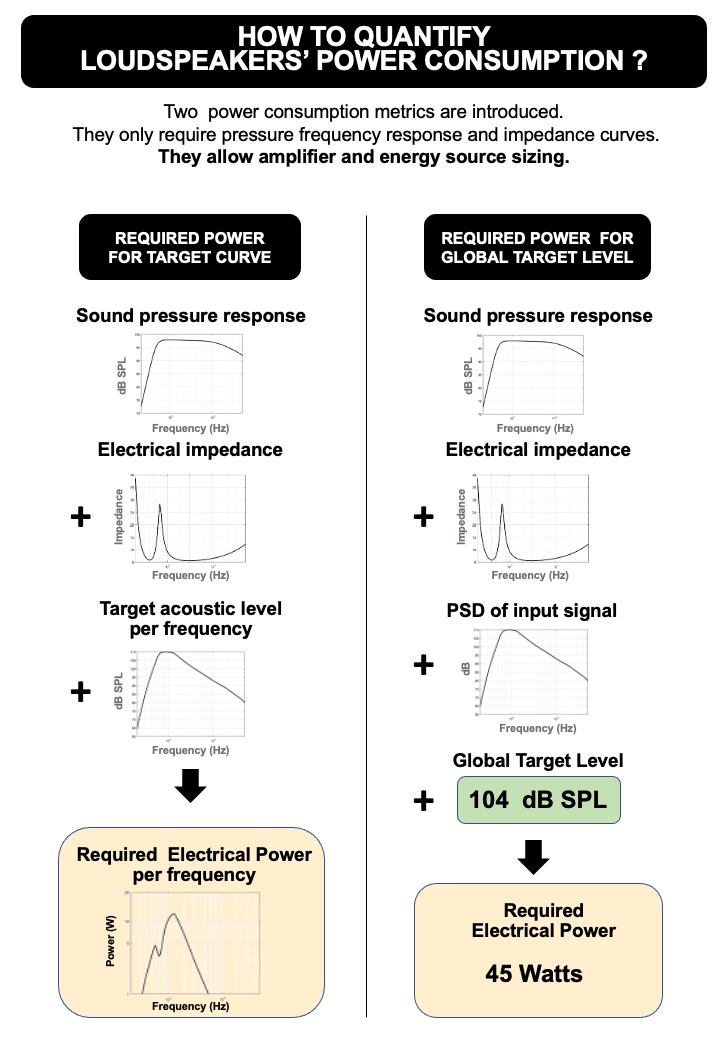
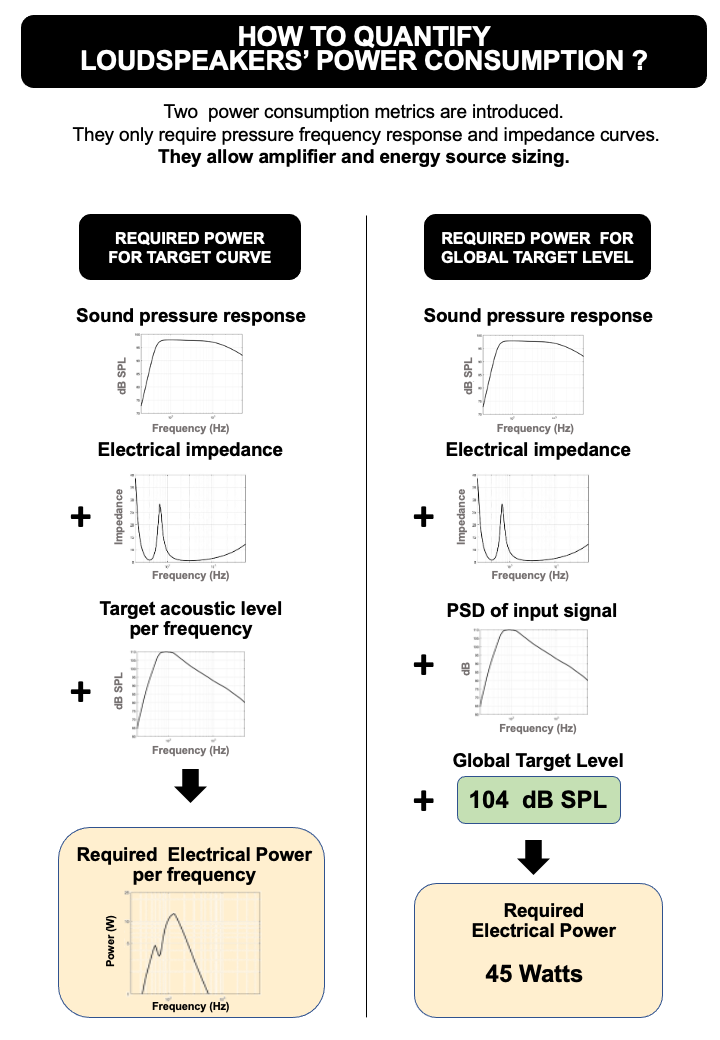
The second part presents two new metrics, created by PikiP, which make it possible to precisely give the electrical consumption of a sound system, based on its basic characteristics (impedance and transfer function), depending on the type of music and the desired sound level. The maths used is simple, and this metric can be adopted by anyone, engineers and users alike, to design less energy-hungry speakers, or to size the power supply as accurately as possible during an event. Ultimately, the aim would be for this metric to appear on all technical data sheets to guide users.
The article "Efficiency VS Sensitivity", already published on the Pikip website, is in fact an introduction to the discussion on the notion of efficiency as opposed to that of sensitivity.
After the full feature in SonoMag in July, it is now the leading scientific journal that showcases the work of the whole team.
Graphical abstract accompanying the AES article: